
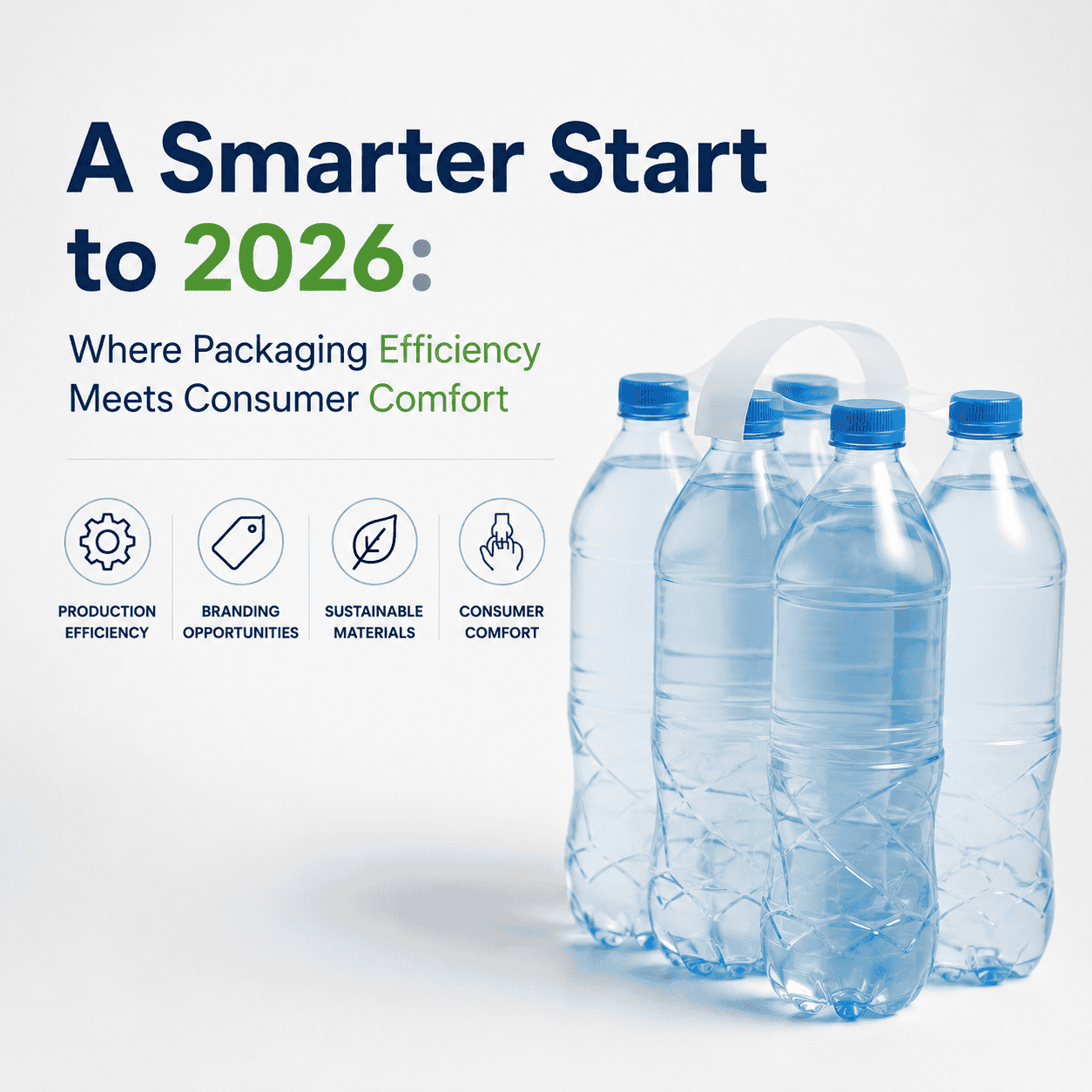
As supply chains recalibrate and consumer expectations continue to evolve, 2026 presents a unique inflection point for packaging decision-makers. The choices made at the beginning of this year will ripple through operations, brand perception, and customer satisfaction for months to come. For companies managing high volume products, from beverage multipacks to household essentials, one often-overlooked element holds surprising power: the carry handle.
What began as a simple convenience feature has matured into a strategic packaging component that influences production efficiency, sustainability metrics, brand visibility, and the physical experience consumers have with products. The carry handle sits at the intersection of operational performance and human-centered design, making it an ideal starting point for packaging optimization in 2026.
This article examines how thoughtful carry handle selection can create measurable improvements across multiple dimensions: streamlining production workflows, enhancing on-pack branding opportunities, reducing material waste, and delivering the kind of intuitive, comfortable carrying experience that builds quiet brand loyalty.
Rethinking Efficiency: Production Integration as a Strategic Priority
Most packaging conversations focus on primary materials or visual appeal, treating handles as commodity afterthoughts. This perspective leaves significant value on the table. Production inefficiencies often stem from handle application challenges, while poorly designed handles create consumer friction that shapes purchasing decisions at an unconscious level.
Production efficiency in 2026 demands more than faster line speeds. It requires packaging components that integrate seamlessly with existing equipment while maintaining flexibility for future needs. Modern carry handle solutions offer application versatility that aligns with diverse production environments.
Handles delivered on rolls can feed directly into automated applicators, eliminating manual handling and its associated labor costs. Pre-laminated versions reduce the number of process steps, speeding throughput while maintaining consistent quality. For facilities with mixed manual and automated workflows, handles that perform reliably in both contexts provide operational flexibility.
Adhesive technology has advanced significantly, with formulations now tailored to specific packaging materials and application methods. Handles designed for shrink-wrapped multipacks require different adhesive characteristics than those applied to corrugated cartons or rigid plastic packaging. Using the right adhesive for each application reduces failures, minimizes waste, and ensures consistent performance across production runs.
Changeover time represents another often-overlooked efficiency factor. Packaging lines that produce multiple SKUs need components that allow quick transitions between product types. Carry handles supplied in consistent formats with clear application parameters reduce setup complexity and keep lines running productively.
The efficiency gains extend beyond the packaging facility. Handles that maintain reliable adhesion throughout distribution reduce the incidence of packaging failures in transit and at retail, protecting product integrity and
maintaining brand reputation in the market.
Branding Real Estate: Transforming Handles into Marketing Assets
In competitive retail environments, every square centimeter of packaging surface represents an opportunity to communicate brand values and capture consumer attention. The carry handle, positioned prominently at eye level when products are lifted, offers prime branding real estate that many companies underutilize.
Printable carry handles transform a functional component into an active marketing tool. Brand logos, promotional messages, sustainability credentials, or seasonal graphics can be incorporated directly into the handle design. This creates an additional brand touchpoint without requiring changes to primary packaging graphics or increasing overall material usage.
The strategic value of branded handles extends beyond simple logo placement. For companies emphasizing sustainability commitments, printing messages like “Made with recycled materials” or “100% recyclable” directly on handles reinforces environmental positioning at the moment of consumer interaction. Seasonal promotions, limited-edition product launches, or co-branding partnerships gain visibility through custom printed handles.
Color customization offers another branding dimension. While standard handles typically come in transparent or neutral tones, custom colors can align handles with overall package design, create visual distinction on crowded shelves, or coordinate with brand identity systems.
The physical presence of a well-designed handle also contributes to perceived product value. Consumers associate thoughtful packaging details with premium quality and brand attention to detail. A handle that feels substantial, incorporates brand elements, and demonstrates material quality elevates the overall product presentation.
Material Matters: Navigating the Sustainability-Performance Balance
Sustainability has moved from peripheral concern to central purchasing criterion for many consumer segments. Packaging decisions in 2026 must account for environmental impact while maintaining the performance standards that ensure product protection and supply chain efficiency.
Carry handle materials span a spectrum of sustainability profiles, each with distinct advantages. Paper-based handles offer the highest environmental credentials, using renewable resources and integrating seamlessly into existing recycling streams. For brands targeting environmentally conscious consumers or responding to regional plastic reduction regulations, paper handles provide clear sustainability messaging backed by tangible material choices.
Recycled PET (rPET) handles represent another strong sustainability option, incorporating post-consumer recycled content while maintaining the durability and moisture resistance required for beverage multipacks and other challenging applications. Products using rPET handles can claim meaningful recycled content percentages, supporting corporate sustainability goals and resonating with consumers who prioritize circular economy principles.
The sustainability equation extends beyond material composition to include factors like material efficiency and end-of-life processing. Handles that use minimal material while maintaining necessary strength reduce overall packaging footprint. Designs compatible with existing recycling infrastructure make it easier for consumers to dispose of packaging responsibly, increasing actual recycling rates rather than simply theoretical recyclability.
Performance considerations remain essential. A sustainable handle that fails under normal use conditions damages both the product and the brand’s environmental reputation. The goal is identifying solutions that meet or exceed performance requirements while improving environmental impact compared to conventional alternatives.
The Ergonomics of Everyday Interactions
Consumer comfort during product transport receives less attention than it deserves in packaging design discussions. Yet the physical experience of lifting, carrying, and transporting a product creates emotional impressions that influence brand perception and future purchase decisions.
Handle placement determines how weight distributes across the hand and arm during carrying. Handles positioned to maintain natural balance reduce strain and create a more comfortable carrying experience. Poorly positioned handles force awkward grips, increasing fatigue and making products less pleasant to transport from store to car to home.
Material properties influence comfort substantially. Handle width affects pressure distribution across the hand; wider handles spread weight over larger surface areas, reducing discomfort during extended carrying. Material softness impacts grip comfort, with appropriate cushioning reducing the sensation of weight and preventing the sharp edges or thin profiles that can cut into hands.
Demographic diversity requires inclusive design thinking. Handles that work comfortably for average adult males may prove challenging for seniors with reduced grip strength, individuals with arthritis, or children helping carry groceries. Universal design approaches that accommodate diverse user needs expand potential markets while demonstrating brand consideration for all consumers.
The carrying experience becomes particularly important for products purchased frequently. Consumers buying bottled beverages, paper products, or cleaning supplies on a regular basis develop strong preferences based on handling comfort. Brands that consistently deliver comfortable carrying experiences benefit from accumulated positive impressions that drive loyalty over time.
Smart Implementation: A Framework for Handle Selection
Optimizing carry handle solutions for 2026 requires systematic evaluation across multiple dimensions:
Production Environment Assessment: Analyze current packaging line capabilities, throughput requirements, and automation levels. Identify whether handles need to integrate with existing automated applicators or whether manual application will continue.
Material Compatibility Analysis: Evaluate the packaging materials handles will be applied to, including shrink film, corrugated board, rigid plastic, or combinations. Ensure adhesive formulations match these materials and account for surface characteristics that might affect adhesion.
Performance Requirements Definition: Specify the weight loads handles must support, transportation distances, handling frequencies, and environmental conditions products will encounter. Include safety margins that account for real-world variability.
Sustainability Goal Alignment: Review corporate environmental commitments, regulatory requirements in target markets, and consumer expectations for sustainable packaging. Identify opportunities to improve environmental impact without compromising performance.
Brand Integration Planning: Consider how handles can reinforce brand identity through color, printing, or material choices. Evaluate whether custom branding on handles supports current marketing priorities or seasonal campaigns.
Consumer Experience Testing: Where possible, test handle options with representative consumer groups. Observe how different demographics interact with various handle designs and gather feedback on comfort, perceived quality, and ease of use.
Case for Change: Why 2026 is the Moment for Handle Optimization
Several converging factors make 2026 an opportune time for packaging handle evaluation and optimization.
Regulatory pressures around single-use plastics continue intensifying globally. The European Union’s revised packaging regulations, similar initiatives in various U.S. states, and emerging requirements in Asian markets create urgency around sustainable packaging transitions. Handle materials often represent achievable quick wins with visible sustainability impact.
Consumer expectations around packaging functionality have heightened. The e-commerce boom of recent years trained consumers to expect packaging that travels well and handles easily. These expectations now extend to retail packaging, with consumers comparing the ease and comfort of in-store product handling.
Supply chain resilience has become a strategic priority following recent global disruptions. Packaging components that offer flexible sourcing, reliable performance across varying conditions, and compatibility with multiple production systems contribute to overall supply chain stability.
Labor availability and cost pressures affect packaging operations across industries. Solutions that reduce manual handling requirements, simplify training, or increase automation compatibility deliver immediate operational value.
Making the Change: Practical Implementation Steps
Organizations ready to optimize carry handle solutions can follow a phased approach that manages risk while capturing benefits:
Phase 1: Assessment (Weeks 1-4) – Conduct thorough evaluation of current handle performance, including production efficiency metrics and consumer feedback. Engage cross-functional stakeholders from production, quality, sustainability, marketing, and procurement. Identify 2-3 high-priority opportunities where handle optimization could deliver significant impact.
Phase 2: Testing (Weeks 5-12) – Obtain samples of promising handle solutions and conduct structured testing including production trials and consumer evaluation. Analyze test results quantitatively where possible, measuring throughput changes, application success rates, or consumer preference scores.
Phase 3: Implementation (Weeks 13-20) – Work with suppliers to finalize specifications, establish quality standards, and confirm delivery schedules. Implement on selected product lines, monitoring closely for any issues while collecting production metrics and consumer feedback.
Phase 4: Expansion (Weeks 21+) – Based on initial success, develop plans for expanding optimized handles to additional product lines. Continue refining based on accumulated experience and establish regular review cadence.
Conclusion
The beginning of 2026 offers packaging decision-makers a natural moment for assessment and optimization. Among the various packaging components available for improvement, carry handles present an unusually attractive opportunity: they combine achievable implementation, multiple sources of value, and relevance to current industry priorities around sustainability, efficiency, and consumer experience.
Handles that integrate smoothly into production workflows reduce operational friction and costs. Handles that incorporate branding elements transform functional necessities into marketing assets. Handles designed with sustainable materials advance environmental goals while maintaining performance. Handles engineered for comfort create positive consumer experiences that accumulate into brand preference over time.
The convergence of these benefits within a single packaging component makes carry handle optimization a smart starting point for packaging improvement initiatives in 2026. As markets continue evolving and competition intensifies, success increasingly depends on attention to details that competitors overlook. The carry handle represents exactly this kind of detail: seemingly small, actually significant, and ripe for optimization by organizations ready to look beyond conventional thinking.
2026 presents the opportunity. The question is whether your organization will seize it.
FAQ
- Why should packaging handles be a priority for review in 2026?
Multiple factors converge to make 2026 an ideal time for handle evaluation: tightening sustainability regulations across major markets, increased consumer expectations for comfortable product handling, ongoing labor cost pressures that reward automation-compatible solutions, and material innovations that offer improved performance with better environmental profiles. Additionally, many companies committed to multi-year sustainability goals now need tangible packaging improvements to meet upcoming targets, and handles represent achievable quick wins with measurable impact.
- How do carry handle choices affect production efficiency beyond basic application speed?
Production efficiency impacts extend across multiple operational dimensions. Handle compatibility with automated equipment determines whether lines can run at full speed or require manual intervention that slows throughput. Adhesive reliability affects failure rates, which directly influence material waste and rework requirements. Changeover complexity between different products depends partly on how standardized or variable handle applications are across the product portfolio. Handles supplied in consistent, equipment compatible formats reduce setup time and training requirements. Reliability during distribution reduces returns and customer service costs associated with packaging failures.
- What sustainability options exist for carry handles, and how do they compare?
Paper-based handles offer the strongest environmental positioning, using renewable materials and integrating into existing recycling streams. They work particularly well for carton-based packaging and appeal to highly sustainability-conscious consumers. Recycled PET (rPET) handles incorporate 70-90% post-consumer recycled content while maintaining the durability needed for beverage multipacks and moisture-exposed applications. Some manufacturers also offer PE handles designed to be recyclable alongside shrink film, supporting circular economy goals for all-plastic packaging systems. Material efficiency improvements (using less material while maintaining strength) reduce environmental impact regardless of base material choice.
- How can brands use carry handles for marketing and brand differentiation?
Handles positioned prominently at eye level during lifting and carrying provide valuable branding real estate. Direct printing on handles allows logo placement, promotional messaging, sustainability claims, or seasonal graphics without changing primary packaging. Custom colors create visual distinction on shelves and reinforce brand identity systems. Premium handle materials and design communicate product quality and brand attention to detail. For products purchased frequently, branded handles create accumulated impressions that build recognition. Handles also offer space for QR codes linking to digital content, contest entries, or recycling information that extends consumer engagement beyond the physical product.
- What role does ergonomics play in carry handle design, and why does it matter?
Ergonomics determines the physical comfort and ease with which consumers can lift, carry, and transport products. Handle placement affects weight distribution and whether natural, comfortable grips are possible. Handle width influences pressure distribution across the hand; wider handles spread weight over larger areas, reducing discomfort during carrying. Material properties including softness and flexibility impact how handles feel during use. Load capacity confidence affects whether consumers feel secure carrying products and influences willingness to purchase larger pack sizes. For frequently purchased items, cumulative handling experience shapes brand perception and loyalty, making ergonomics a subtle but powerful influence on repeat purchase behavior.
- How should companies approach testing and implementing new carry handle solutions?
Effective implementation follows a phased approach starting with thorough assessment of current performance, production requirements, and improvement opportunities. Testing should include both production trials (measuring application success rates, line speed impacts, and failure rates) and consumer evaluation assessing handling comfort, perceived quality, and aesthetic appeal across diverse demographic groups. Implementation typically begins with high-volume or strategically important products where impact is most significant and learning is most valuable. Close monitoring during initial rollout identifies any adjustments needed before
expanding to additional products. Working with specialized suppliers who provide technical support and application guidance reduces implementation risk and accelerates optimization.
