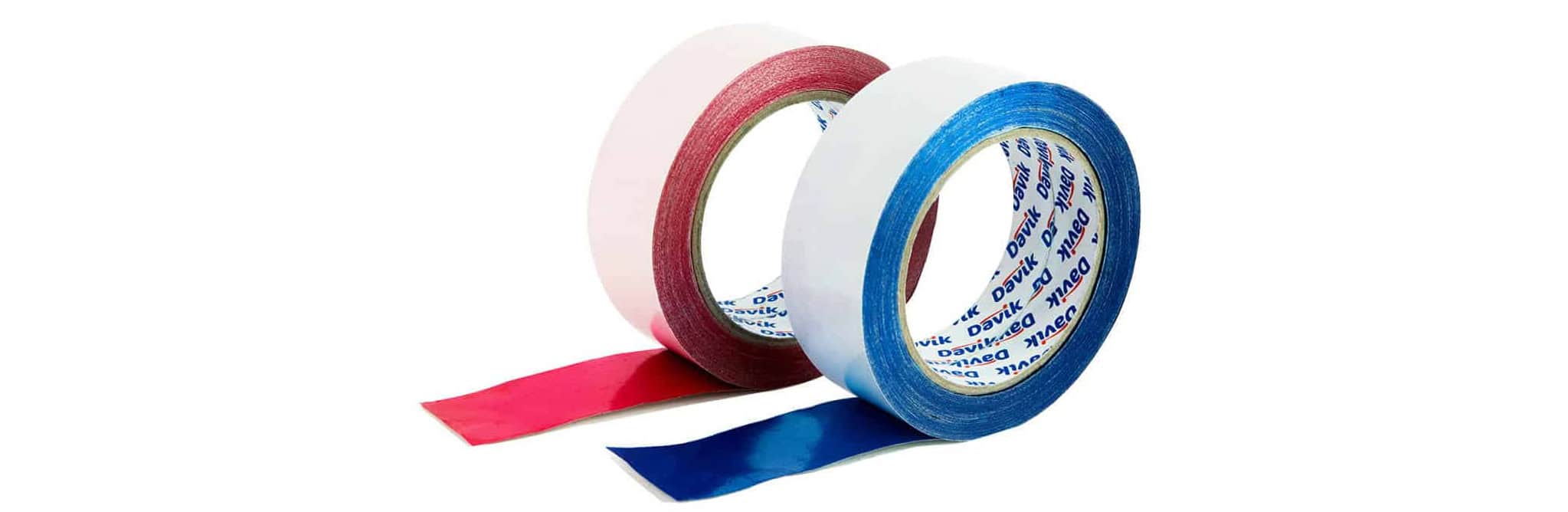
Reliable splicing. Accurate detection. Continuous production.
Keep high-speed nonwoven production running continuously with splicing tapes
designed not only to create a secure splice, but also to ensure that the splice can be
reliably detected and removed during production.
Nonwoven material is processed from large rolls. When one roll ends, it needs to be
joined to the beginning of the next roll. Splicing tape connects the two webs so
production can continue without stopping and re-threading the line. A reliable splice
helps reduce downtime, material waste and production losses.
The splice must not only hold securely during production; it must also be identified
so it does not remain in the finished product. A successful splice needs to do two jobs:
hold securely during high-speed production, and be reliably detected so it can be removed
before reaching the final product.
Davik splicing tapes are used across high-speed nonwoven converting, wherever a roll
change must be fast, secure and traceable.
Understand the main differences at a glance, then open the product page for full
specifications.
| Product | Carrier | Adhesive | Detection | Best suited for | |
|---|---|---|---|---|---|
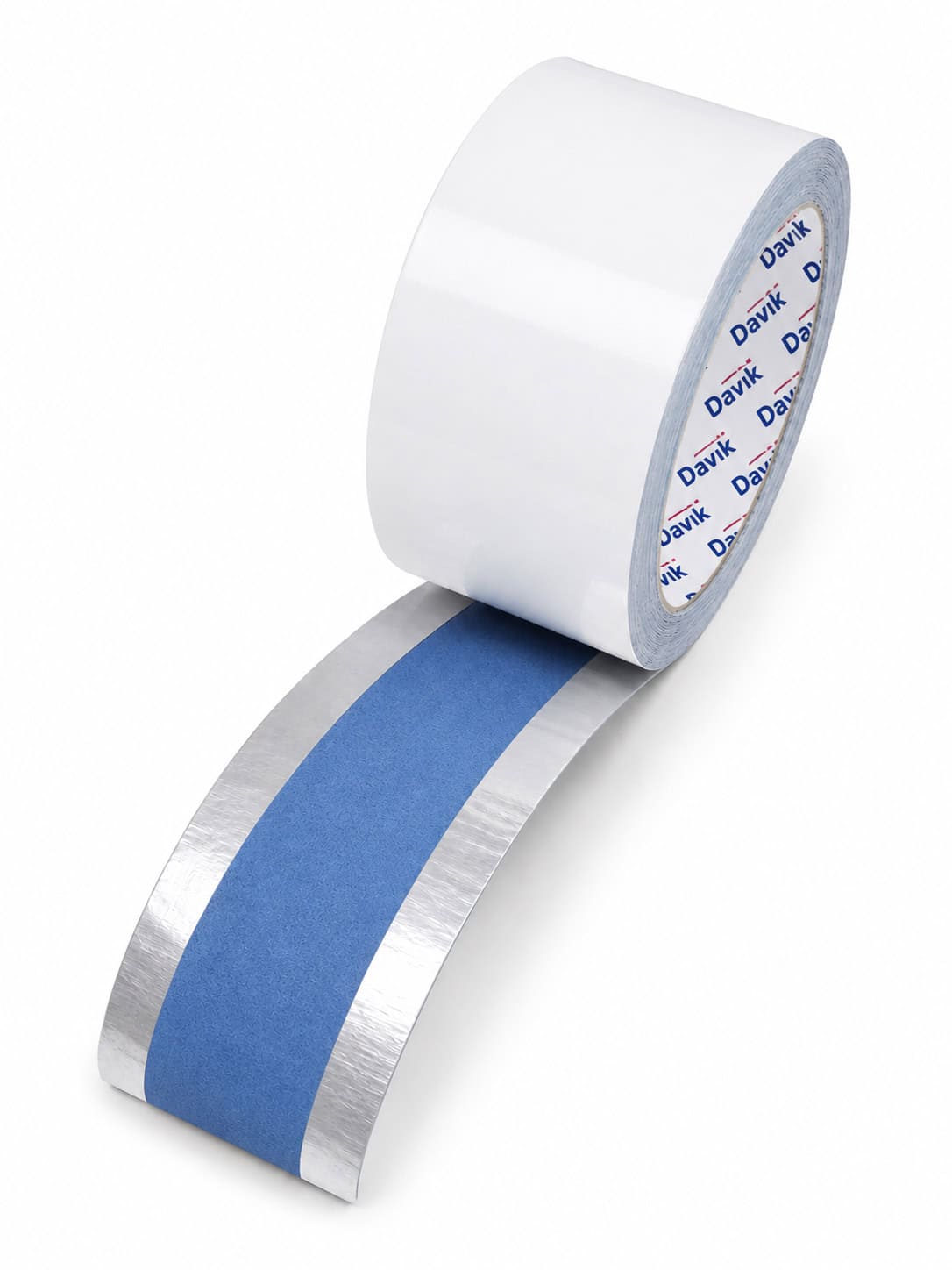
| DS4935 | Aluminium foil | Water-based acrylic | Metal + optical | Flying splice and folding machines | View product |
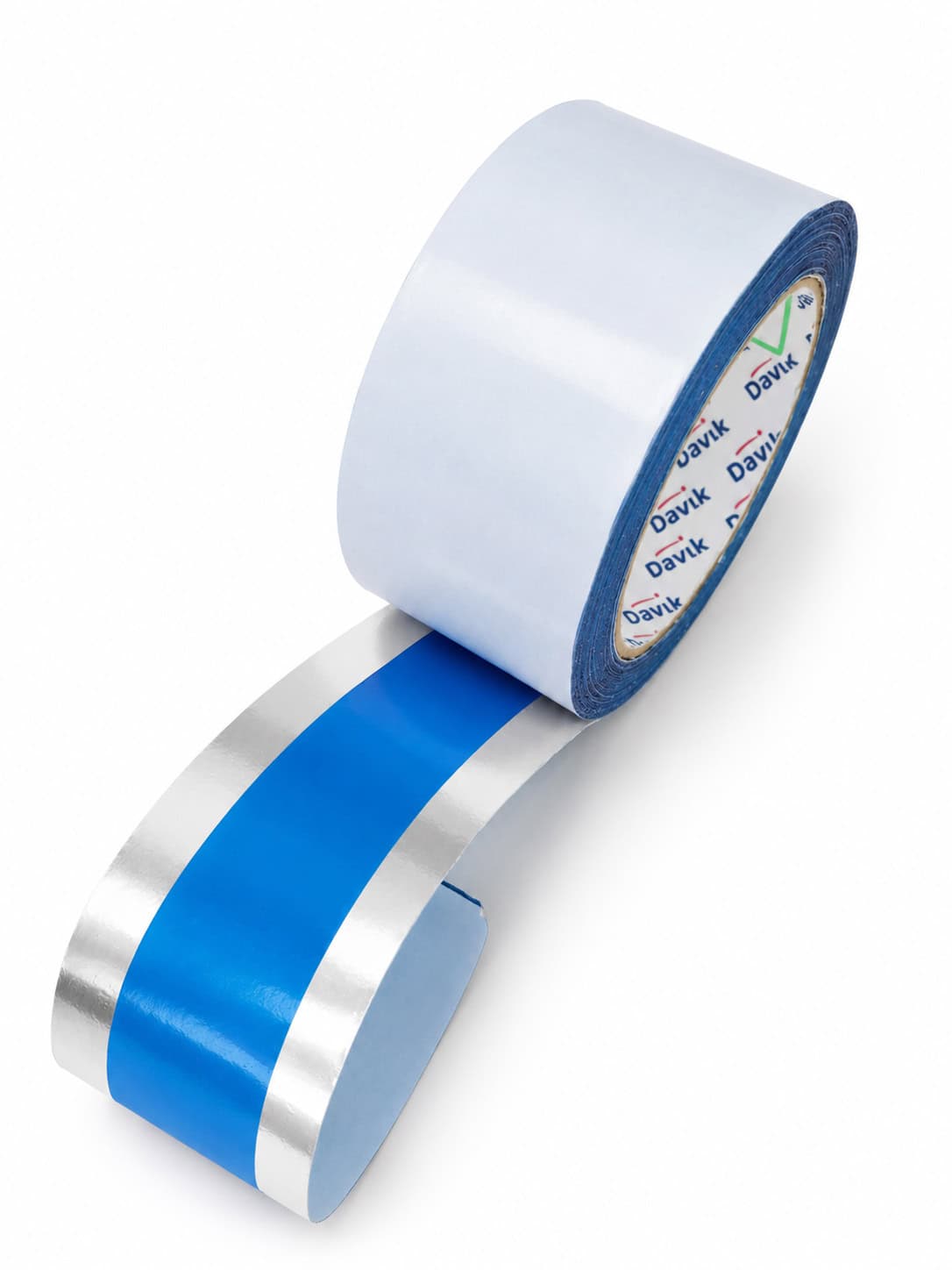
| DT4133 | BOPP / PET film + aluminium strips | Hot melt | Metal + optical | High-speed flying splice, wide web | View product |
| DS4885 | Stretchable nonwoven + aluminium strips | Water-based acrylic | Metal + optical | Wide web where flexibility is required | View product |
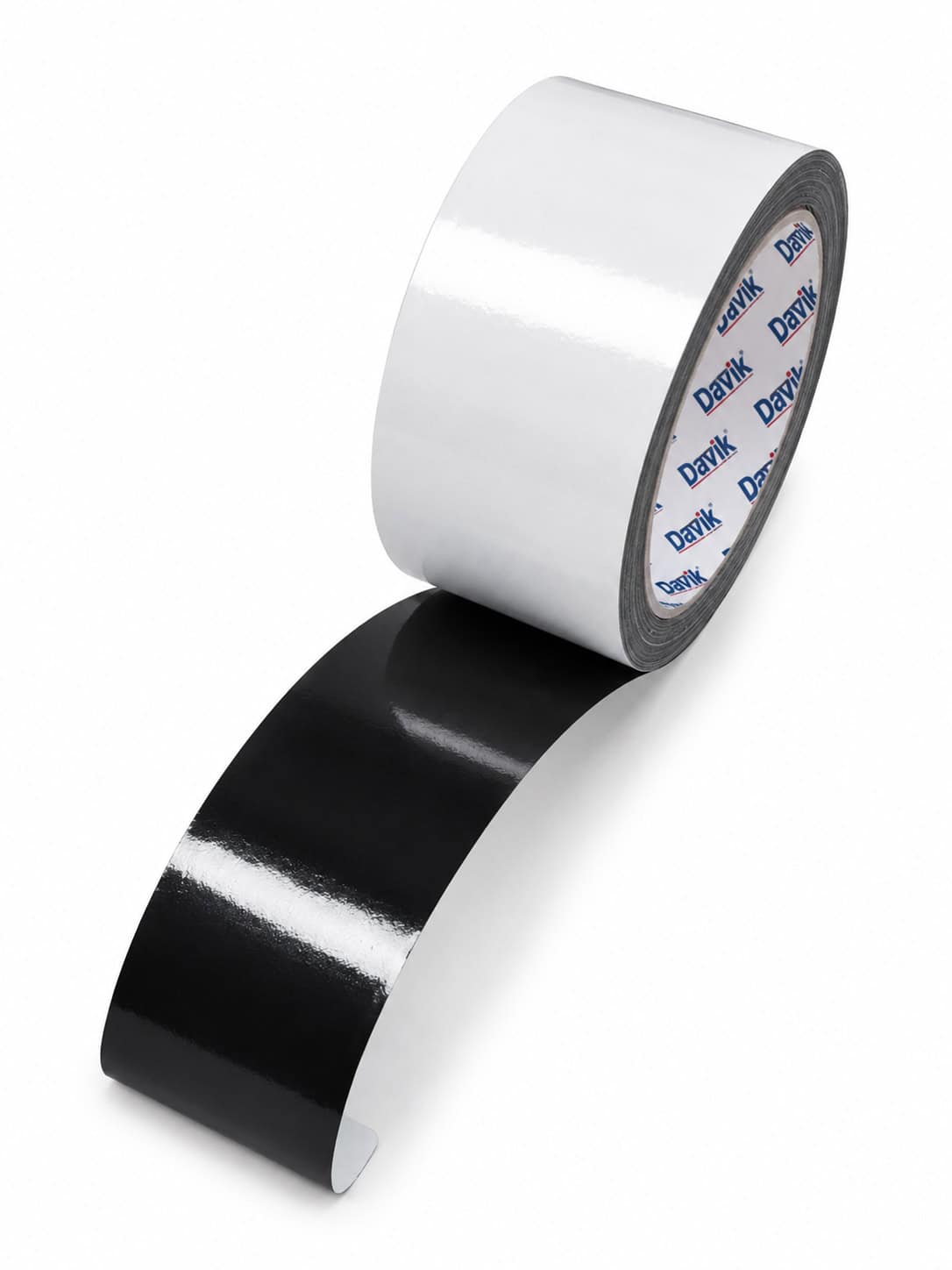
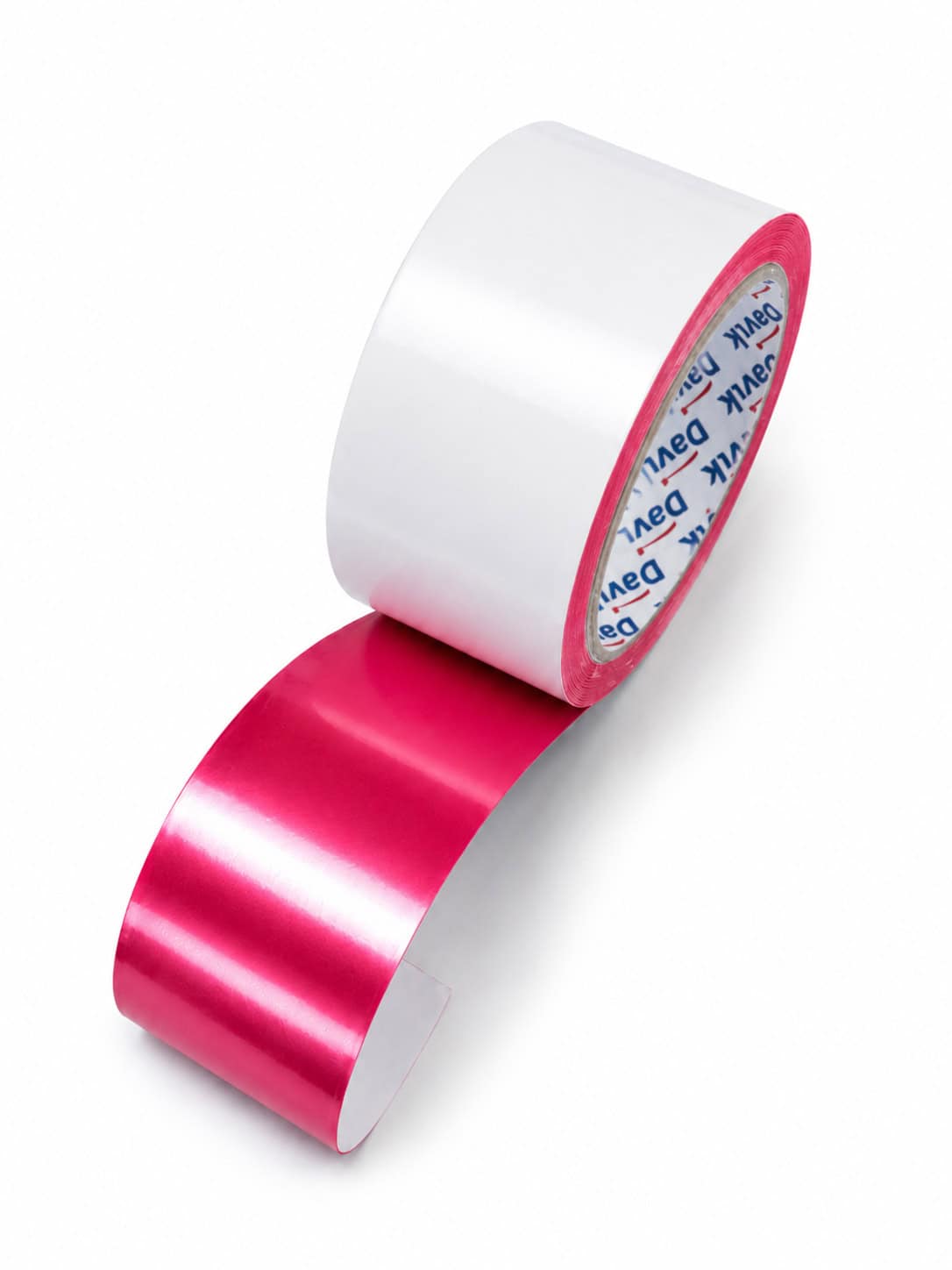
| DS4926 | Tissue paper | Water-based acrylic | Visual | Visual splice identification | View product |
Not sure which tape fits your line?
Ask our technical team — tell us your substrate,
machine and detection system and we will recommend the right construction.
To choose the right splicing tape for your application, share the following details
about your process and requirements — only the ones you have available.
Every production line is different. Davik can help select the tape according to the
material, equipment, production speed and detection system.
Over 40 years of specialty adhesive tape manufacturing experience, applied to the
specific demands of high-speed nonwoven converting.
Splicing tape is used to
connect the end of one material roll to the beginning of the next, allowing production to
continue without stopping the converting line. A reliable splice helps reduce downtime,
material waste and production interruptions.
In
high-speed nonwoven converting, roll changes must be fast and reliable. Splicing tape creates
a secure connection between rolls so production can continue smoothly, helping manufacturers
minimize downtime, reduce waste and maintain consistent product quality.
Splice detection tape
combines secure splicing with a detectable element that allows the production line to identify
the splice. Depending on the tape construction, the splice can be detected by metal, optical or
visual detection systems so it can be identified and removed before reaching the finished
product.
Metal
detectable splicing tapes contain aluminium foil or integrated aluminium strips. These metal
elements allow compatible detection systems to identify the splice as it passes through the
production line. Davik offers both aluminium-foil and aluminium-strip constructions for
different converting requirements.
Metal
detection identifies the splice through a metal component in the tape, such as aluminium foil
or aluminium strips. Optical detection identifies the splice through its optical or visual
characteristics. Some Davik splicing tapes support both metal and optical detection, while
DS4926 is intended for visual splice identification.
For
high-speed flying splice applications, DT4133 is designed to provide high initial tack, strong
holding power and reliable splice detection. Its hot melt adhesive and integrated aluminium
detection strips make it particularly suitable for wide-web, high-speed nonwoven production.
DS4935 is also suitable where an aluminium foil construction and water-based acrylic adhesive
are preferred.
Davik
offers both water-based acrylic and hot melt adhesive technologies. Water-based acrylic adhesive
is used in DS4935, DS4885 and DS4926, while DT4133 uses a high-tack hot melt adhesive designed
for applications requiring immediate bonding in high-speed flying splices. The best option
depends on the substrate, production speed, machine and splice requirements.
Davik
offers different tape widths, colours, carrier materials, adhesive technologies and single- or
double-sided constructions across its splicing tape range. Custom sizes and colours are also
available. For specific production requirements, Davik’s technical team can recommend the most
suitable construction based on the material, machine, production speed and detection
system.
Tell us about your substrate, production line, speed and detection system. Our technical
team will help identify the most suitable solution for your application.