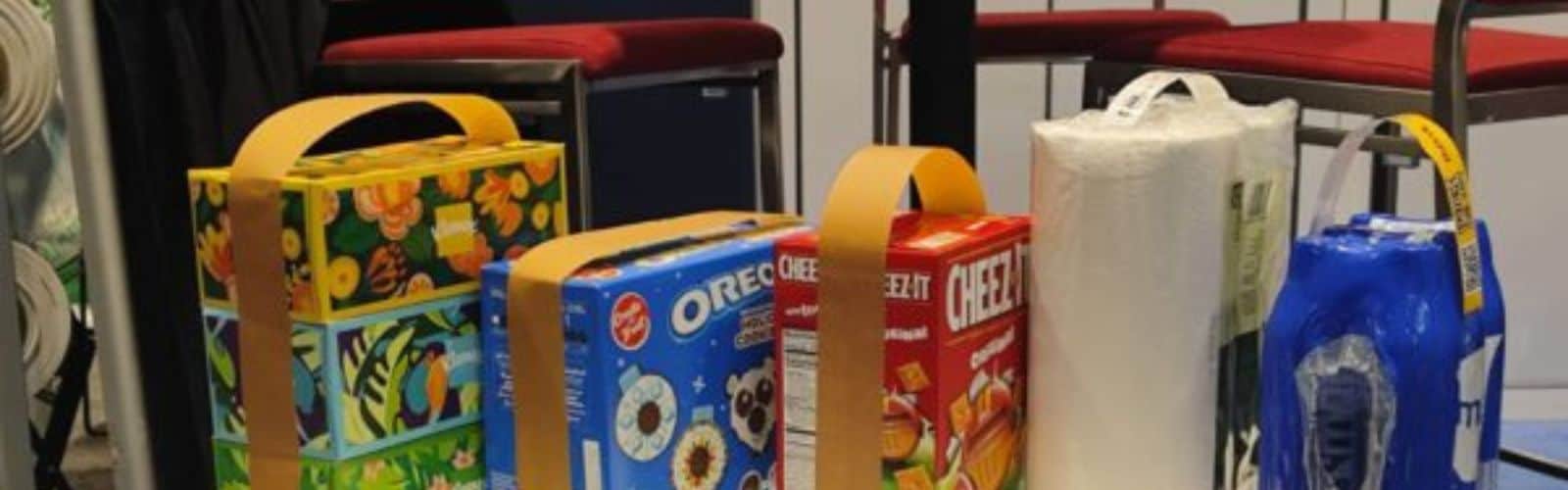
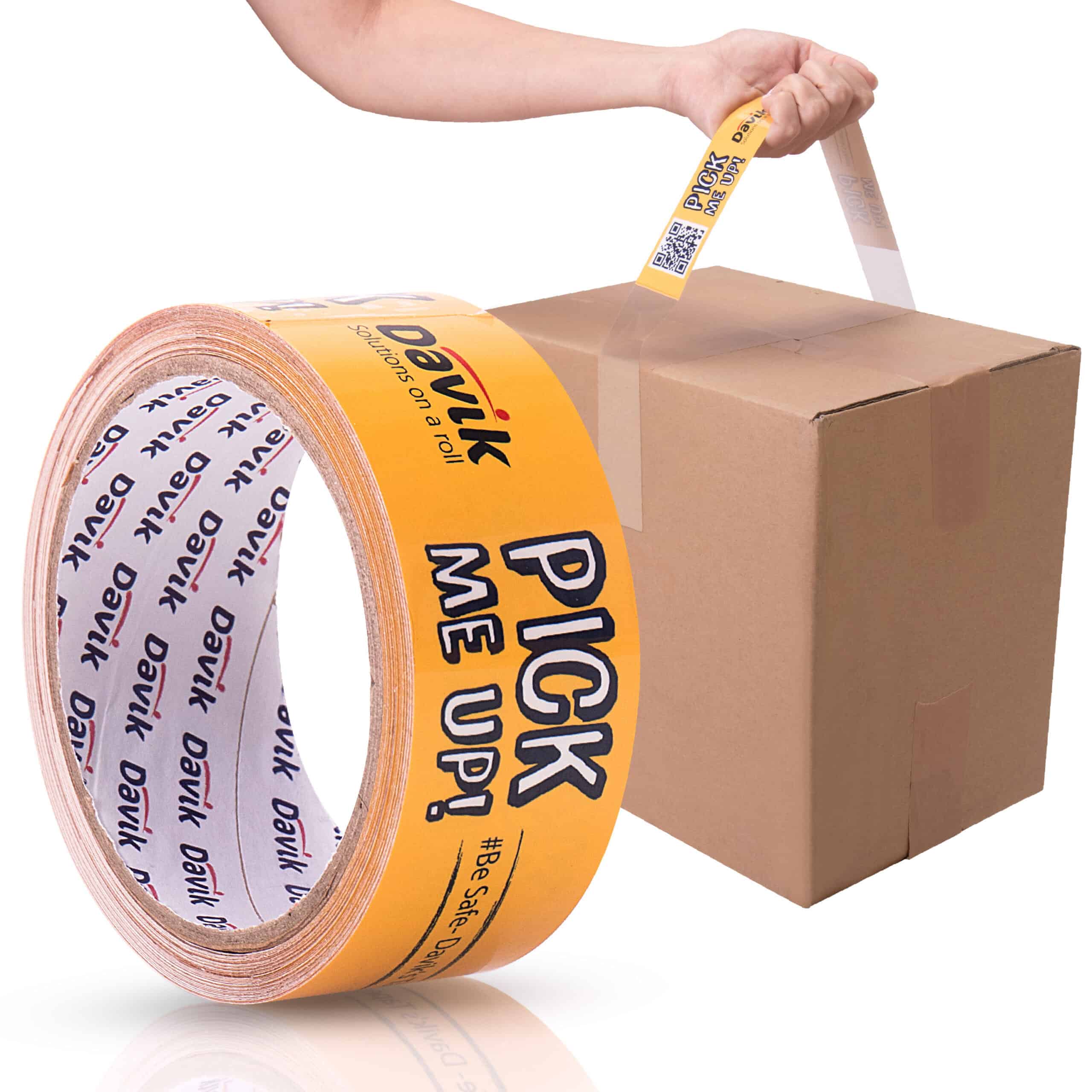
For food and beverage manufacturers already using carry handle tape, the conversation is no longer about adoption (at least for most of them). It is about optimization.
As sustainability targets tighten and line speeds increase, three operational priorities are reshaping handle specifications: lower material footprint, higher application accuracy, and greater process stability.
The manufacturers achieving the best results are not simply applying handles more efficiently. They are rethinking the product form itself, shifting from traditional adhesive spools that require in-line lamination to pre-laminated solutions engineered for high-speed automated application.
This transition reflects broader industry pressures. Consumer demand for sustainable packaging continues intensifying. Regulatory frameworks mandate recyclable materials and reuse targets. Production lines operate with tighter labor margins and stricter efficiency requirements. In this environment, every component matters, including the seemingly simple carry handle.
The Three Pressures Driving Specification Changes
1. Material Footprint Reduction
Sustainability is no longer optional in food and beverage packaging. Consumer behavior data reveals the scale of this shift: 70% of consumers are willing to pay more for products with sustainable packaging, according to recent industry surveys. More importantly, 78% consider sustainability vital, and 63% have already begun greener buying practices.
The sustainable food and beverage packaging market is expected to exceed $100 billion in the next five years. This growth reflects both consumer preference and regulatory pressure.
Europe’s Packaging and Packaging Waste Regulation (PPWR), recently implemented, sets specific targets: transport packaging must achieve a 40% reuse rate by 2030, rising to 70% by 2040. Recycled content requirements mandate at least 10% recycled material by 2030, increasing to 65% for bottles by 2040.
Similar frameworks are emerging globally. Canada has implemented Extended Producer Responsibility laws in British Columbia and Ontario. Singapore will enforce its Beverage Container Return Scheme by 2026.
For carry handle applications, this regulatory environment creates two imperatives: reduce total material usage through precision application, and transition to recyclable or recycled-content substrates.
2. Application Accuracy at Higher Speeds
The global packaging automation market reached $78.25 billion in 2024 and is projected to hit $158.30 billion by 2034. Food and beverage applications represent the largest segment at 32.95% market share, driven by hygiene requirements, consistency demands, and labor constraints.
U.S. packaging machinery grew 5.8% to $10.9 billion in 2023, with forecasts predicting 8.0% growth by 2027. This expansion is fueled by automation investments addressing labor shortages and efficiency targets.
The labor context is critical. The U.S. labor market remains extremely tight, with nearly one job opening for every unemployed person (PMMI 2025 Economic Outlook). At the recent PMMI Top to Top Summit, 78% of industry leaders identified productivity as their top priority, followed by cost control and automation at nearly 50% each.
Higher line speeds expose weaknesses in traditional handle application methods. Manual application creates obvious bottlenecks. But even automated systems using adhesive spools that laminate during application introduce variables: alignment accuracy, pressure consistency, speed synchronization between the handle applicator and the main packaging line.
Each variable represents a potential source of defects, waste, and downtime.
3. Process Stability in Multi-SKU Environments
Modern food and beverage production demands flexibility. Brands offer multiple variations per product line: different flavors, sizes, seasonal offerings, limited editions. Production lines must switch between SKUs seamlessly without introducing errors or slowing output.
This requirement conflicts with complex application processes. The more process steps involved in applying a carry handle, the more opportunities for inconsistency when changing formats or adjusting line parameters.
Process stability depends on reducing variables, not managing them more carefully.
The Pre-Laminated Advantage
Traditional carry handle application uses adhesive spools: film coated with adhesive, delivered on cores. The lamination layer (paper, foam, or other material that creates the handle’s grip surface) is applied during the packaging process. This requires in-line lamination equipment that bonds the grip material to the adhesive film as the handle is positioned on the package.
Pre-laminated solutions eliminate this step. The lamination occurs at the manufacturing facility under controlled conditions. The finished handle arrives ready to apply: film, adhesive, and grip material already bonded.
This seemingly simple change delivers measurable operational benefits.
Fewer Process Variables
In-line lamination introduces multiple synchronization requirements. The adhesive film must unwind at the correct tension. The lamination material must feed at a matched speed. Pressure rollers must apply consistent force. Alignment between layers must remain precise throughout the run.
Temperature affects adhesive tack. Humidity influences paper behavior. Line speed changes require recalibration of all these parameters simultaneously.
Pre-laminated handles reduce this complexity. The product arrives as a single, finished component. Application becomes a matter of positioning and adhering, not building the handle during application.
High-Speed Compatibility
Davik Industries, a pioneer in carry handle technology since 2003, specifically designs pre-laminated spools for high-speed applicators. This distinction matters.
High-speed automated lines operate with minimal tolerance for process variation. A handle applicator running at maximum throughput cannot accommodate the alignment corrections, pressure adjustments, or tension fluctuations that in-line lamination may require.
Pre-laminated products maintain dimensional consistency because lamination occurred under factory conditions optimized for uniformity. Every handle in the roll exhibits the same thickness, the same layer adhesion, the same flexibility characteristics.
This consistency allows automated applicators to run at design speed without frequent adjustment or quality checks.
Reduced Material Waste
Precision matters economically and environmentally. Misapplied handles create rejected packages. Each rejection represents wasted handle material, wasted packaging material, and potentially wasted product if the package cannot be salvaged.
Application accuracy depends on predictability. When the handle dimensions, stiffness, and adhesive properties vary within a roll due to in-line lamination inconsistencies, applicators must operate conservatively. This often means slower speeds or wider tolerance margins, both of which reduce efficiency.
Pre-laminated consistency enables tighter process control, which translates to fewer defects and less scrap.
Material Substrate Evolution
The shift toward pre-laminated solutions facilitates material innovation. Davik’s pre-laminated portfolio spans multiple substrate options addressing different sustainability and performance requirements.
Traditional handles used MOPP (Metalized Oriented Polypropylene) or BOPP (Biaxially Oriented Polypropylene) films for strength and reliable bonding. Recycled PET (rPET) options now provide comparable performance while supporting circular economy principles. Davik’s rPET handles incorporate 90% recycled content, addressing consumer preferences and regulatory mandates.
Paper-based handles represent the most significant sustainability advancement. Major brands demonstrate market acceptance: PepsiCo transitioned beverage multipacks from plastic rings to paper-based packaging in August 2023. Diageo pioneered a 90% paper-based bottle for Johnnie Walker in 2021.
Pre-laminated paper handles eliminate plastic entirely from secondary packaging. When combined with paper or cardboard primary packaging, this creates fully recyclable package streams requiring no material separation.
Implementation Considerations
The decision to transition from adhesive spools to pre-laminated solutions depends on several operational factors.
Line Speed and Volume
Pre-laminated handles deliver the greatest advantage on high-speed automated lines where consistency and uptime are critical. Lines running at moderate speeds with manual or semi-automated application may not justify the transition immediately.
Volume matters as well. Higher volume operations see faster payback from waste reduction and efficiency improvements. The material cost difference between adhesive spools and pre-laminated products becomes less significant when measured against total operational savings.
SKU Complexity
Operations managing many SKUs benefit from simplified changeovers. Switching handle types on a pre-laminated system requires only loading a different roll. Switching on an in-line lamination system may require adjusting multiple web paths, tension settings, and alignment parameters.
For production environments where flexibility matters as much as speed, pre-laminated solutions reduce changeover complexity.
Sustainability Reporting Requirements
Companies facing regulatory compliance deadlines or sustainability commitments may prioritize material transitions over process optimization. Pre-laminated handles simplify the adoption of recycled-content or paper-based options because the finished product arrives ready to integrate.
This reduces the technical barriers to meeting recycled content targets or eliminating plastic from specific product lines.
Davik’s Solution Portfolio
Davik Industries offers carry handle products across the full application spectrum, allowing manufacturers to match product form to their specific requirements.
For Manual or Low-Speed Application:
- Detachable rolls designed for manual handling
- Pancake rolls suited to slow automatic applicators
For Standard or High-Speed Automated Lines:
- Adhesive spools on 152mm cores for in-line lamination
- Lamination options include white paper, printed paper, polypropylene, 1mm foam, and 2mm foam
- Substrate options span MOPP, BOPP, PET, rPET, PE, and paper
For Converters and Custom Applications:
- Logs slit to 300mm or 600mm widths for specialized production
The adhesive formulations themselves vary by packaging type. Davik has developed specific adhesives for shrink packaging, carton packaging, PET bottle applications, and pre-shrink machine compatibility. Material-specific adhesives ensure reliable bonding regardless of substrate or packaging surface.
Strategic Importance in 2026
Food and beverage manufacturers face competing pressures: consumer sustainability demands, regulatory recyclability mandates, labor constraints, tighter production schedules, and SKU proliferation.
In this context, seemingly minor components acquire strategic importance. A carry handle represents a material choice with sustainability implications, a process step with efficiency consequences, and an application challenge with quality ramifications.
Manufacturers treating carry handle specification as a strategic decision achieve measurable advantages: lower material waste through precision application, higher line speeds through process simplification, greater flexibility through reduced changeover complexity, and stronger sustainability credentials through material innovation.
Pre-laminated solutions represent the evolution of this component from basic add-on to optimized system element. For operations already using carry handles, the question is whether current specifications align with today’s operational requirements.
When line speeds are increasing, sustainability targets are tightening, labor availability is constraining, and process stability matters more than ever, the invisible details become visible through their impact.
FAQ
- How do pre-laminated carry handles differ from traditional adhesive spools in actual production conditions?
Traditional adhesive spools require in-line lamination equipment that bonds the grip material during application, introducing multiple process variables including alignment, pressure, speed synchronization, and tension control. Pre-laminated handles arrive with lamination completed under controlled factory conditions, eliminating these variables and enabling higher application accuracy, faster line speeds, and more consistent handle quality throughout production runs.
- What line speed or production volume justifies transitioning to pre-laminated solutions?
High-speed automated lines benefit most significantly from pre-laminated handles due to their consistency and simplified application process. The transition becomes increasingly justified as line speeds increase, SKU complexity grows, and sustainability requirements tighten. Operations managing multiple product variations or facing strict efficiency targets often see faster returns through reduced waste, simplified changeovers, and improved uptime compared to moderate-speed or manual application environments.
- How do paper-based carry handles perform compared to plastic film options on automated lines?
Paper-based handles eliminate plastic from secondary packaging entirely, supporting recyclability targets and consumer preferences for sustainable materials. When pre-laminated, paper handles maintain dimensional consistency needed for high-speed automated application, avoiding the moisture and fiber direction challenges that complicate in-line paper lamination. Major brands including PepsiCo have successfully transitioned to paper-based packaging, demonstrating commercial viability at scale.
- Can pre-laminated handles accommodate printed branding or custom grip materials?
Yes. Pre-laminated solutions support various lamination materials including printed paper for brand messaging, polypropylene for durability, and foam (1mm or 2mm thickness) for enhanced grip comfort. Because lamination occurs at the manufacturing facility, printing quality and material bonding are controlled independently from the packaging line, often resulting in superior appearance and consistency compared to in-line processes affected by line speed variations.
- How does the material cost of pre-laminated handles compare to adhesive spools with in-line lamination?
Pre-laminated handles typically carry higher unit costs than adhesive spools due to the value-added lamination processing. However, total operational costs often favor pre-laminated solutions when accounting for reduced waste from application errors, lower labor requirements, faster line speeds, simplified changeover procedures, and elimination of in-line lamination equipment maintenance. High-volume operations and sustainability-focused manufacturers generally achieve positive returns through these operational efficiencies.
- What sustainability advantages do recycled PET carry handles offer compared to virgin plastic options?
Recycled PET (rPET) handles support circular economy principles by incorporating post-consumer plastic waste, with Davik’s options containing 90% recycled content. This addresses regulatory mandates like Europe’s PPWR requiring 10% recycled content by 2030, rising to 65% for bottles by 2040. rPET handles maintain comparable strength and durability to virgin materials while reducing environmental impact and meeting growing consumer expectations for recycled-content packaging.
