Agricultural operations face constant pressure from flying insects. Whether you’re managing a greenhouse nursery, a hydroponic facility, or a livestock barn, insect control directly impacts crop yields, animal health, and operational efficiency.
Traditional chemical sprays create ongoing costs, regulatory concerns, and environmental questions. They also risk pesticide resistance and can harm beneficial insects. As farming operations seek more sustainable, cost-effective solutions, adhesive-based insect control has emerged as a practical alternative.
This article presents two complementary approaches to agricultural insect management. Catchy sticky traps deliver mass-trapping capabilities for greenhouses and protected cultivation, using color-specific targeting to manage diverse pest species. Buzz Off provides liquid adhesive solutions designed to reduce fly populations in livestock facilities without chemical treatments.
Both systems share a core advantage: they control insects through physical capture rather than chemical exposure, supporting safer working environments, cleaner operations, and integration with modern pest management strategies.
More information about existing solutions – visit our website www.catchybydavik.com
The Case for Adhesive-Based Insect Control
Traditional insecticide applications offer quick knockdown but come with hidden costs.
Recurring spray schedules demand labor, equipment, and material expense. Chemical resistance develops over time, requiring stronger formulations or new products. Residue concerns affect marketability, particularly for fresh produce, herbs, and organic operations. Environmental impact extends beyond target pests to beneficial insects, pollinators, and local ecosystems.
Adhesive-based control eliminates these complications:
- Non-toxic operation safe around workers, animals, and crops • No chemical resistance development • Dual function as monitoring and control tool • Reduced environmental impact • Compatible with Integrated Pest Management (IPM) protocols • Long-lasting effectiveness (months rather than days)
The approach works particularly well in controlled environments where external pest populations can be managed or excluded, allowing adhesive traps to systematically reduce indoor populations.
Catchy for Greenhouse Operations: Color-Targeted Mass Trapping
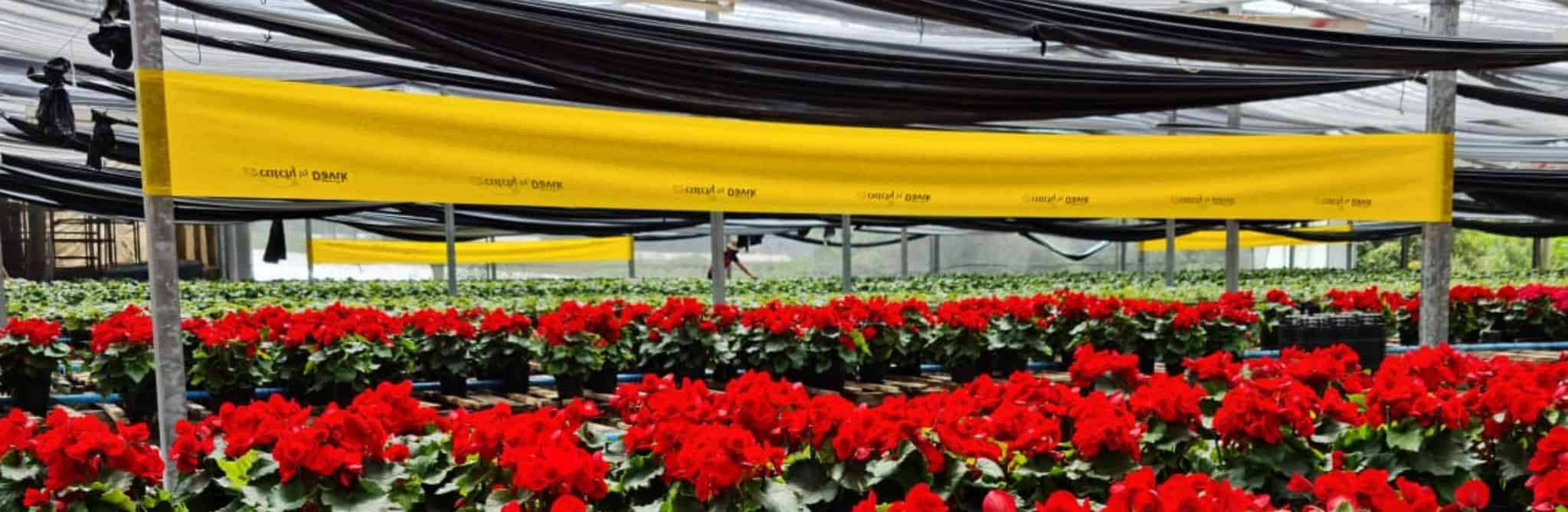
Greenhouse and indoor farming operations require precise pest management without compromising crop quality or worker safety. Catchy delivers this through color-specific adhesive sheets designed for different pest species.
Core Technology
Catchy uses a dry adhesive formulation developed specifically for agricultural applications. The adhesive maintains effectiveness for six months minimum, even in dusty greenhouse conditions and temperature extremes.
Key features:
- Thick sheet construction prevents distortion during extended use • Dual-sided adhesion maximizes capture surface • Pre-applied adhesive eliminates application labor • Remains effective in humid, dusty environments • Provides both monitoring and mass-trapping capability
Color-Specific Pest Targeting
Different insect species respond to specific wavelengths. Catchy exploits this behavior with three targeted options:
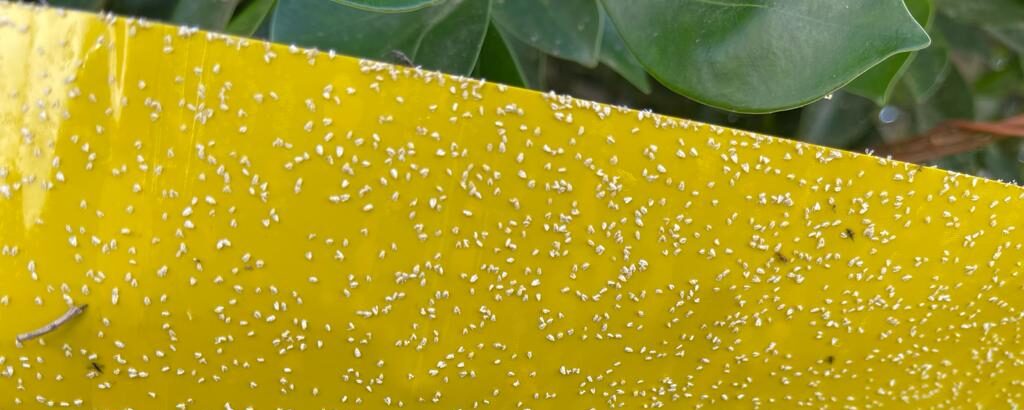
Catchy Yellow targets tobacco whitefly (Bemisia tabaci), flying aphids, leaf miners, shore flies, and fungus gnats. Yellow attracts the widest range of common greenhouse pests, making it the default choice for general protection.
Catchy Blue focuses on Western Flower Thrips (Frankliniella occidentalis) and related thrips species. These pests cause significant damage to flowers, fruits, and leaves while transmitting plant viruses.
Catchy Black specifically captures tomato pinworm/leaf miner (Tuta absoluta), a destructive pest in tomato operations that traditional yellow traps miss entirely.
Application Environments
Catchy works across protected cultivation:
- Vegetable and ornamental nurseries • Herb production (parsley, cilantro, mint, basil) • Microgreens and sprouts • Vegetable crops (eggplant, peppers, tomatoes) • Leafy greens (lettuce, spinach, arugula) • Strawberry operations • Ornamental flowering pots and orchids • Cannabis cultivation • Indoor hydroponic systems
The system requires that external pest populations cannot directly access crops, achieved through greenhouses, insect-proof net houses, or fully enclosed indoor growing facilities.
Catchy Glue-Pro: Refill and Renewal
For operations managing large trap deployments or operating in open-field conditions, Catchy Glue-Pro extends system economics.
This liquid adhesive comes in jerry cans for field application:
- Spray onto filled traps to restore capture capability • Apply directly to structures in barns or open areas • Refresh traps without full replacement • Reduce long-term operating costs • Maintain continuous protection
The refill option particularly benefits operations with high insect pressure where traps fill quickly, or facilities needing permanent adhesive barriers on walls, posts, or equipment.
Buzz Off for Livestock Facilities: Liquid Fly Control
Livestock operations face different insect challenges than crop production. House flies (Musca domestica) and stable flies (Stomoxys calcitrans) create animal stress, spread disease, reduce feed conversion efficiency, and complicate daily operations.
Buzz Off provides non-toxic fly management specifically designed for farm conditions.
Livestock-Ready Performance
Farm environments test equipment severely. Buzz Off delivers:
- Heat resistance for barn conditions • Dust tolerance in high-particulate environments • Humidity performance in naturally damp facilities • Long-lasting adhesion under farm stress
Application Flexibility
Buzz Off works across livestock operations:
- Cattle facilities • Poultry houses • Swine operations • Sheep and goat barns • Stables and equine facilities
The liquid format allows strategic placement:
- Paint onto panels or boards positioned near high-fly areas • Apply to existing structures without adding equipment • Spray directly where flies congregate • Renew as capture surfaces fill
Safety Profile
Chemical-free operation matters in animal facilities:
- Non-toxic to livestock at all life stages • Safe for workers handling and applying product • No chemical residue concerns • No withdrawal periods before slaughter • Compatible with organic livestock operations
Business Impact
Fly control delivers measurable value:
- Improved animal comfort reduces stress-related health issues • Better feed conversion efficiency • Reduced disease transmission vectors • Cleaner facility appearance • Lower labor for cleaning and sanitation • Better working conditions for farm staff
Implementation Strategy: Getting Started
Successful adhesive insect control requires systematic deployment.
For Greenhouse Operations (Catchy)
- Assess Pest Profile Identify primary pest species through visual inspection or previous growing records. Select appropriate colors based on target insects.
- Calculate Trap Density Research-based guidelines vary by pest species and purpose. For monitoring: one trap per 100-250 square feet for whiteflies, one trap per 1,000-10,000 square feet for thrips (University Extension sources). For mass trapping to reduce populations: increase density significantly, with some operations using one trap per 100 square meters or less during active infestations.
- Position Strategically Hang traps at canopy height where flying insects are most active. Place near entry points, ventilation areas, and known problem zones.
- Monitor and Maintain Check traps weekly. Document catch numbers to track population trends and treatment effectiveness. Replace when surface coverage reaches approximately 70%.
- Integrate with IPM Use trap data to time biological control releases, adjust environmental controls, or implement supplementary treatments only when thresholds indicate necessity.
For Livestock Facilities (Buzz Off)
- Identify Problem Areas Map fly concentration zones: feed storage, watering points, manure collection areas, resting locations.
- Prepare Application Surfaces Clean surfaces before application. Ensure materials are compatible with adhesive (wood, metal, plastic).
- Apply Strategically Focus applications where flies naturally congregate. Avoid animal contact zones. Consider height and accessibility for future renewal.
- Establish Renewal Schedule Monitor adhesive capture effectiveness. Plan renewal based on fill rate and seasonal fly pressure (typically every 4-8 weeks during peak season).
- Combine Approaches Pair adhesive control with facility sanitation, manure management, and environmental controls for comprehensive fly management.
Economic Analysis: Cost vs. Chemical Programs
Adhesive control systems require upfront investment but deliver long-term savings.
Initial Investment Components:
- Trap sheets or application materials • Installation labor (minimal for most systems) • Storage and handling equipment
Ongoing Costs:
- Replacement sheets or adhesive renewal • Monitoring labor (often less than spray programs) • Disposal of used traps
Cost Advantages vs. Chemical Programs:
- No specialized application equipment • No applicator licensing or training requirements • Reduced labor per application cycle • Extended effectiveness period (months vs. days) • No re-entry restrictions affecting farm operations • Lower environmental compliance costs
Many operations report 30-50% cost reduction compared to conventional spray programs when calculated over full growing or production seasons.
Integration with Modern Farming Practices
Adhesive insect control aligns with multiple agricultural trends.
Organic Certification Non-chemical control supports organic certification requirements while maintaining effective pest management.
IPM Protocols Adhesive traps provide the monitoring foundation for IPM decision-making, offering both early detection and quantifiable population data.
Worker Safety Eliminating chemical exposure reduces PPE requirements, training costs, and liability concerns.
Sustainability Commitments Non-toxic approaches support environmental stewardship messaging and market differentiation for operations emphasizing sustainable production.
Labor Efficiency Simplified application and maintenance reduce skilled labor requirements, addressing workforce challenges common in agriculture.
Limitations and Considerations
Adhesive control excels in specific contexts but isn’t universal.
Works Best When:
- Protected environments limit external pest immigration • Pest pressure remains moderate to manageable • Operations can monitor and maintain trap systems • Integration with other controls is possible
Less Effective When:
- Uncontrolled external pest sources continuously invade • Severe infestations require immediate knockdown • No monitoring capability exists • Operations cannot maintain trap replacement schedules
Success depends on matching the approach to operational realities and pest pressure levels.
Making the Choice: Which System for Your Operation
Select Catchy when:
- Managing greenhouse or indoor growing operations • Targeting specific flying pests in protected environments • Monitoring pest populations for IPM decisions • Operating organic or low-chemical facilities • Working with high-value crops where chemical residue matters
Select Buzz Off when:
- Controlling flies in livestock facilities • Managing open or semi-open structures • Needing flexible application on existing infrastructure • Operating organic livestock systems • Seeking renewable, long-term fly suppression
Consider Both when:
- Operating mixed crop-livestock farms • Managing multiple structure types • Seeking comprehensive non-chemical insect control • Building diversified IPM programs
Technical Support and Implementation Assistance
Successful deployment of adhesive insect control benefits from expert guidance, particularly for operations new to these systems or facing unique challenges.
Davik provides technical support for agricultural pest control applications. Contact options include direct consultation through daviktapes.com/contact-us-new/ or WhatsApp at +972-52-605-6055 for application guidance, troubleshooting, and customized solutions.
For complex installations, site-specific pest challenges, or integration with existing IPM programs, working with experienced suppliers ensures proper system design and maximizes control effectiveness.
Conclusion
Agricultural insect control has evolved beyond regular chemical applications. Adhesive-based systems deliver practical alternatives that reduce costs, improve safety, and support sustainable operations.
Catchy provides greenhouse and indoor operations with targeted mass-trapping using color-specific technology proven across diverse crops and growing systems. Buzz Off brings that same adhesive expertise to livestock facilities facing persistent fly pressure.
Both approaches share core advantages: non-toxic operation, long-lasting effectiveness, dual monitoring-and-control functionality, and compatibility with modern agricultural practices. They represent practical tools for operations seeking to reduce chemical dependence without sacrificing pest control effectiveness.
The question isn’t whether adhesive control can work, but whether it matches your operational needs, pest pressure levels, and management capabilities. For many agricultural operations in 2026, the answer increasingly points toward yes.
FAQ
- How long do Catchy traps remain effective in greenhouse conditions?
Catchy traps maintain adhesive effectiveness for at least six months, even in dusty greenhouse environments with temperature and humidity extremes. Actual lifespan depends on pest pressure and how quickly capture surface fills.
- Can adhesive-based systems completely replace chemical insecticides?
In protected environments with controlled pest access, adhesive systems often eliminate or drastically reduce chemical needs. Open operations may require integrated approaches combining adhesive control with targeted treatments during severe pressure.
- What’s the cost comparison between Catchy/Buzz Off and conventional spray programs?
Most operations report 30-50% cost reduction over full growing seasons when accounting for materials, labor, equipment, and regulatory compliance. Initial setup costs typically recover within one to two production cycles.
- How do I choose between yellow, blue, and black Catchy traps?
Yellow targets the broadest range including whiteflies, aphids, and leaf miners. Blue specifically attracts thrips. Black captures tomato pinworm. Start with yellow for general protection; add color-specific traps when targeting particular pests.
- Is Buzz Off safe in facilities with young livestock or poultry?
Yes. Buzz Off is non-toxic and safe around all livestock ages and species. Apply adhesive away from direct animal contact zones. Animals cannot ingest or be harmed by the adhesive under normal farm conditions.
- How does adhesive control integrate with Integrated Pest Management (IPM)?
Adhesive traps provide both monitoring and control, forming IPM’s foundation. Trap counts guide treatment timing, track population trends, verify control effectiveness, and enable threshold-based decisions about supplementary interventions.
