
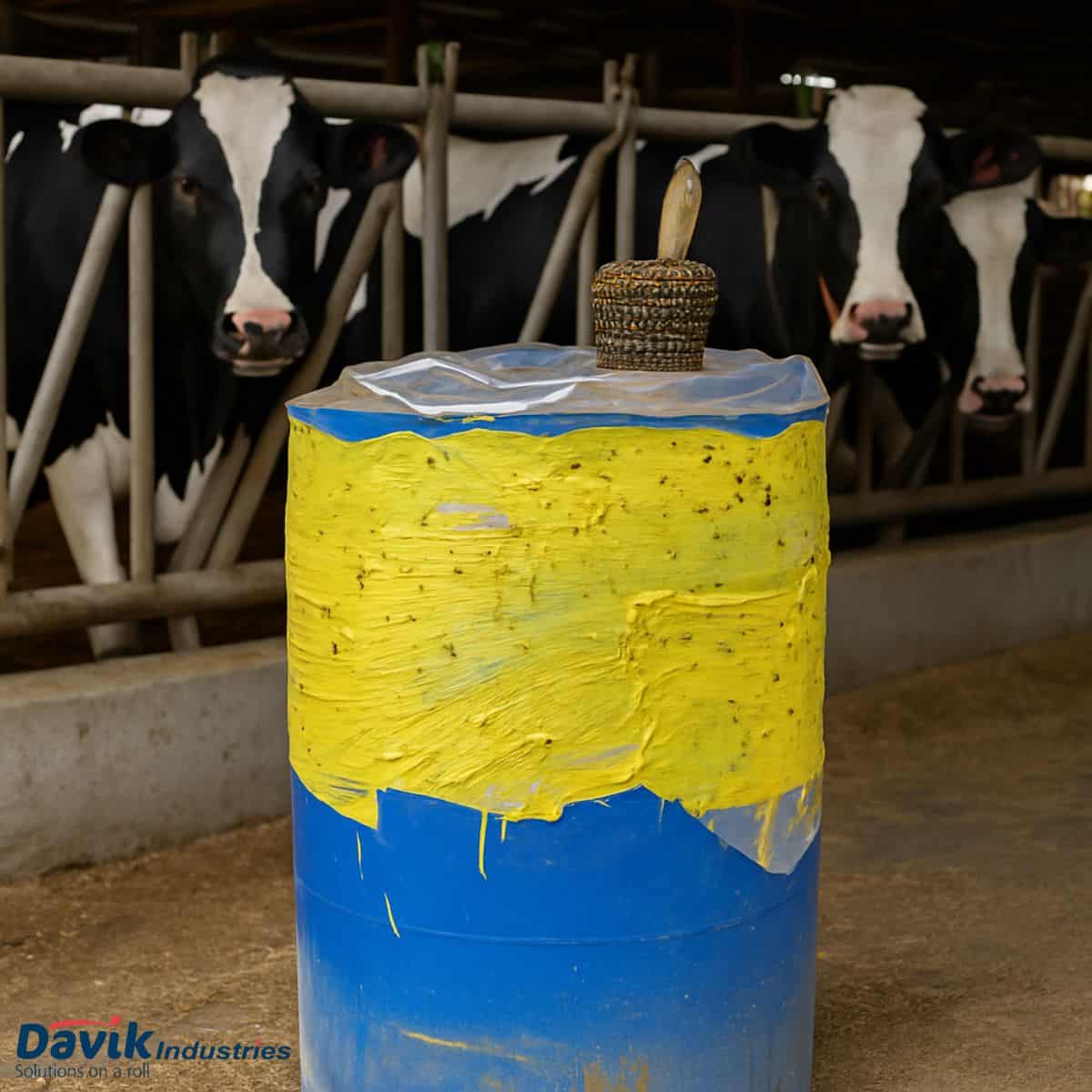
Fly control in livestock operations has reached an economic inflection point. Flies cost U.S. cattle production approximately $6 billion annually, according to industry estimates cited by Oklahoma State University extension specialists in 2025. More than $1 billion of those losses come from horn flies alone.
These numbers represent more than annoyance. They reflect reduced weight gain, decreased milk production, increased veterinary costs, and disease transmission across dairy, beef, poultry, swine, and sheep operations. For decades, the default response was chemical insecticides applied repeatedly throughout the season.
That approach is breaking down. Insecticide resistance is forcing producers to rotate chemical classes. Environmental concerns are intensifying around high-density livestock facilities. Labor costs for repeated applications are rising. Worker safety protocols are becoming more stringent.
The industry is shifting toward Integrated Pest Management (IPM), a framework that treats chemical control as a last resort rather than a first line of defense. Within this shift, non-toxic mechanical controls like adhesive fly capture systems are moving from supplemental tools to core components of comprehensive fly management programs.
The True Economic Impact of Fly Infestations
Flies affect livestock profitability through multiple pathways. Direct production losses occur when biting flies reduce grazing time and stimulate defensive behaviors. Cattle respond to fly pressure by stomping, bunching in groups, standing in water, and spending less time feeding. These behavioral changes translate to measurable weight loss.
Calves experience an average 20-pound reduction in total weight gain over a 100-day growing period when exposed to significant fly pressure. For stockers, the impact intensifies to approximately 60 pounds over the same timeframe. At current cattle prices, that 60-pound difference represents substantial lost revenue per animal.
Dairy operations face parallel challenges. Fly pressure reduces milk production through stress and disrupted feeding patterns. Horn flies, which feed on the backs and udders of cattle, create additional risk by transferring Staphylococcus aureus bacteria that causes mastitis. The economic threshold for horn fly intervention is 200 flies per animal, the point at which production losses exceed control costs.
Disease transmission compounds these direct losses. Face flies spread Moraxella bovis, the bacteria responsible for infectious bovine keratoconjunctivitis (pinkeye). University of Kentucky research shows that pinkeye-affected calves weigh 35 to 40 pounds less at weaning compared to healthy animals. Stable flies and horse flies serve as vectors for anaplasmosis, a blood-borne disease that can devastate entire herds.
The combined impact of reduced production, increased health issues, and treatment costs creates a financial burden that demands effective management. The question is which management approach delivers the best economic return while maintaining operational sustainability.
The Chemical Control Trap
Traditional fly control relied heavily on insecticides delivered through ear tags, sprays, pour-ons, back rubbers, and dust bags. These methods provided reliable knockdown when applied correctly. However, three problems are undermining this approach.
Flies reproduce rapidly, completing life cycles in 10 to 20 days. This accelerated generation turnover creates ideal conditions for resistance when the same chemical class is used repeatedly. Producers must now rotate products based on Mode of Action (MoA) classifications from the Insecticide Resistance Action Committee (IRAC). Group 3A insecticides disrupt nerve function through sodium channels. Group 1B products inhibit acetylcholinesterase. Effective resistance management requires alternating between these modes rather than relying on single chemicals.
Labor constraints intensify the cost challenge. Weekly insecticide sprays for stable fly control (required per NDSU extension research) demand significant workforce commitment. Self-application devices reduce labor but require strategic placement near water or minerals to ensure cattle contact. Each method carries distinct cost structures and application complexity.
Chemical handling introduces worker safety requirements: protective equipment, mixing protocols, disposal procedures. Withdrawal periods before slaughter must be observed. Environmental impacts extend beyond treated animals, affecting non-target insects and potentially impacting water quality through runoff.
The Integrated Pest Management Alternative
The global fly control system for livestock market reached $2.18 billion in 2024, projected to grow at 7.9% annually through 2033 to reach $4.36 billion. Growth is driven by adoption of Integrated Pest Management approaches combining multiple control methods.
IPM operates on a systematic framework established by the EPA: set action thresholds, monitor and identify pests, implement controls in order of risk, and evaluate results.;
Economic thresholds define when intervention is justified. For horn flies, this occurs at 200 flies per animal. Below this level, control costs exceed production losses. Above it, intervention becomes economically necessary.
Prevention through sanitation forms the foundation. Stable flies breed in moist organic matter mixed with manure. Removing breeding substrates, managing drainage, and controlling feed ground conditions eliminate future populations before emergence. Rotational grazing distributes manure rather than concentrating it. These cultural practices address root causes.
Mechanical controls provide first-line active intervention. Physical barriers, traps, and adhesive capture systems offer advantages: no resistance, no withdrawal periods, no residues, continuous operation once deployed. Sticky systems capture flies physically rather than chemically, preventing resistance development.
Biological controls like parasitic wasps target fly pupae but depend on environmental conditions. Chemical controls are applied only after other methods prove insufficient, preserving effectiveness and reducing total chemical use.
Where Non-Toxic Adhesive Solutions Fit
Buzz OFF represents a mechanical control option designed specifically for livestock facility conditions. Unlike agricultural sticky traps intended for greenhouse use, livestock adhesive systems must perform in harsh environments characterized by heat, dust, high humidity, and direct animal contact.
The product targets two fly species that cause significant economic losses: house flies (Musca domestica) and stable flies (Stomoxys calcitrans). Both are common in cattle, poultry, swine, sheep, goat, and equine facilities. Both contribute to the production losses and disease transmission that justify economic intervention.
The Stable Fly Challenge
Stable flies present particular control difficulties. Unlike horn flies that remain on the animal continuously, stable flies are intermittent feeders. They land on the legs and belly regions of livestock, take a painful blood meal, then leave. This feeding pattern means they spend less time on the animal, reducing contact with insecticides applied directly to cattle through ear tags, pour-ons, or back rubbers.
Stable fly bites cause visible distress. Cattle stomp their legs repeatedly, bunch together in groups, or stand in water to avoid the flies. These defensive behaviors disrupt normal grazing and resting patterns, directly affecting weight gain and milk production. North Dakota State University extension specialists report that stable flies can reduce cattle weight gain significantly when populations are not controlled.
The female stable fly deposits eggs in moist organic matter, particularly around feed bunks, fence lines, hay stacks, and winter feeding areas. This makes habitat control essential but difficult to achieve completely in active operations. Supplemental mechanical capture provides ongoing population reduction even when breeding sites cannot be entirely eliminated.
Non-Toxic Operation
Buzz OFF operates without insecticides or toxic chemicals. This removes several operational constraints associated with chemical control:
- No withdrawal periods required before slaughter
- No mixing or protective equipment for application
- No resistance development concerns
- Safe deployment around animals, workers, and visitors
- No environmental residue or runoff
The adhesive formulation is engineered for high-performance capture under livestock facility conditions. Standard adhesives may lose effectiveness in heat or become contaminated with dust. Livestock-specific formulations maintain tackiness through temperature extremes and dust exposure typical of barns, feedlots, and poultry houses.
Flexible Deployment
Different livestock operations present different facility layouts and fly pressure patterns. Adhesive systems can be deployed in high-traffic areas where flies congregate, near feeding zones where stable flies are most active, around water points, or along barn walls and entryways.
Application can be adjusted as seasons change. Spring and early summer typically see lower fly populations. Deployment intensity can increase as temperatures rise and fly pressure builds through mid to late summer. Systems can be renewed or repositioned based on observed fly activity rather than following a rigid chemical application schedule.
Integration Within Comprehensive Programs
The most effective fly control combines multiple methods rather than relying on any single approach. A comprehensive program might include:
Sanitation and Habitat Control:
- Manure management to reduce breeding sites
- Proper drainage in feedlots and barn areas
- Regular cleaning of feed storage areas
- Removal of wet bedding and spoiled feed
Mechanical Controls:
- Strategic placement of adhesive fly capture systems
- Deployment near identified high-activity zones
- Monitoring of capture rates to assess population pressure
Cultural Practices:
- Rotational grazing where applicable
- Spreading manure in pastures rather than concentrating it
- Timing of manure removal from confined areas
Chemical Controls (when necessary):
- Applied only when populations exceed economic thresholds
- Rotated by Mode of Action to prevent resistance
- Targeted to specific areas or animals rather than broadcast
This layered approach reduces reliance on any single method. It maintains flexibility as conditions change. It minimizes costs by avoiding unnecessary treatments while ensuring effective control when economically justified.
The Business Case for Rethinking Fly Control
Livestock operations face pressure from multiple directions: input costs, labor availability, regulatory requirements, and consumer expectations for animal welfare. Fly control fits into this larger operational context.
Chemical-heavy approaches create escalating costs as resistance develops and product rotation becomes necessary. They introduce safety protocols, training requirements, and may conflict with organic certification or reduced-chemical marketing claims.
IPM using mechanical controls as foundation offers cost predictability. Adhesive systems maintain consistent performance without resistance. Deployment costs are primarily upfront rather than recurring weekly applications. Labor requirements are lower than repeated spray treatments.
The environmental profile supports sustainability messaging. Operations demonstrate reduced chemical use while maintaining effective control, aligning with consumer preferences and retailer requirements.
Most importantly, effective fly control protects production metrics: weight gain, milk production, feed efficiency, and animal health. When populations remain below economic thresholds, animals perform at genetic potential rather than diverting resources to stress responses.
The shift from chemical-dependent to integrated approaches is not about eliminating insecticides entirely. It is about using them strategically within a broader framework that prioritizes prevention, mechanical controls, and cultural practices. Non-toxic adhesive solutions provide continuous mechanical capture that reduces fly pressure without chemical risks.
For livestock producers facing $6 billion in annual losses while managing rising costs and tightening labor markets, rethinking fly control is economic necessity.
FAQ
- Why are livestock producers moving away from chemical-only fly control approaches?
Insecticide resistance is reducing chemical effectiveness, forcing costly rotation between product classes. Labor constraints make repeated spray applications difficult. Environmental concerns and worker safety protocols add operational complexity. The Integrated Pest Management framework addresses these issues by using mechanical and cultural controls as primary methods, reserving chemicals for situations where other approaches prove insufficient.
- What economic threshold justifies fly control intervention in cattle operations?
The economic threshold for horn flies is 200 flies per animal, the point where production losses from reduced weight gain and milk production exceed the cost of control measures. Below this level, treatment costs outweigh benefits. Above this threshold, intervention becomes economically justified. Different fly species and livestock types may have different thresholds based on their specific production impacts.
- How do non-toxic adhesive systems fit into Integrated Pest Management programs?
Adhesive fly capture functions as mechanical control, the first active intervention tier in IPM after cultural practices like sanitation. Mechanical controls are deployed before chemical treatments because they introduce no resistance, residues, or safety concerns. Adhesive systems work continuously once placed, reducing fly populations and providing monitoring data that helps producers assess whether additional control measures are necessary.
- Which fly species cause the greatest economic losses in livestock operations?
Horn flies cause over $1 billion in annual U.S. cattle losses through reduced weight gain and milk production. Stable flies inflict painful bites on legs and belly regions, causing defensive behaviors that disrupt grazing. Face flies transmit pinkeye bacteria, resulting in calves that weigh 35 to 40 pounds less at weaning. House flies create sanitation concerns and disease transmission risks in confined facilities.
- Can non-toxic mechanical methods provide sufficient control in high-pressure livestock environments?
Mechanical controls are most effective as part of comprehensive IPM programs that include sanitation, cultural practices, and chemical options when needed. In high-pressure environments, mechanical capture reduces baseline fly populations, allowing other methods to work more effectively. Complete control through mechanical means alone may not be achievable, but significant population reduction is possible, particularly when combined with habitat management that eliminates breeding sites.
- What makes stable flies particularly challenging to control with traditional insecticide methods?
Stable flies are intermittent feeders that land on legs and belly regions, take a blood meal, then leave the animal. This behavior reduces their exposure to insecticides applied through ear tags, pour-ons, or back rubbers that rely on continuous animal contact. They breed in moist organic matter around facilities rather than in fresh manure, making larvicide treatments less effective than for horn flies or face flies.
